Why Is Your Washing Machine Filling So Slowly?
You press Start, the washer locks, and the cycle seems normal—except the tub takes forever to fill.
Instead of hearing a steady rush of water, you get a weak stream. The machine may sit on the fill stage for several minutes, pause repeatedly, or eventually continue with much less water than you expected.
When this happens, it is easy to suspect the control board. But a slow-filling washer often has a much simpler problem somewhere between the household water supply and the machine’s inlet system.
Before replacing an expensive electronic component, it is worth checking how the water is actually getting into the washer.
A Recent Washer Repair in Fort Myers
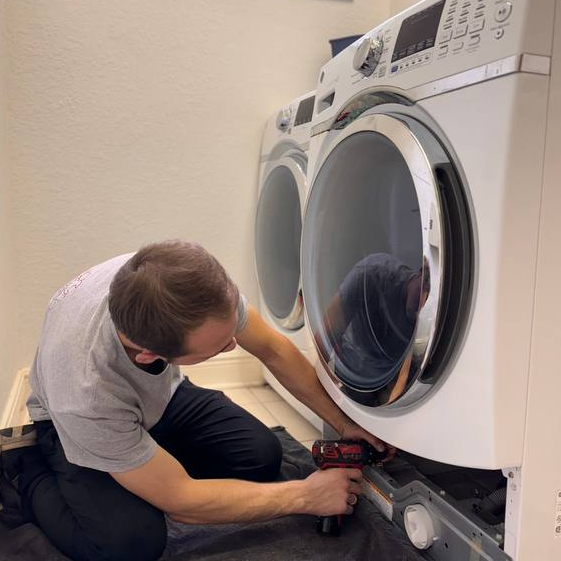
On a recent washer repair call in Fort Myers, the homeowner told us the machine still powered on normally. The door locked, the controls responded, and there were no obvious leaks.
The problem started after pressing Start.
The washer would begin filling, but the cold-water flow was noticeably weaker than normal. A cycle that should have moved into washing relatively quickly spent several extra minutes waiting for enough water to enter the tub.
The homeowner initially suspected an electronic problem because the machine seemed to “pause” during filling.
Our technician started with the water supply rather than the control board.
Both household supply valves were open, and water pressure at the home was normal. The hoses were not kinked or crushed.
The next step was inspecting the washer’s inlet screens and water inlet valve.
The cold-water inlet screen had collected mineral debris, restricting flow. Testing also showed that the cold side of the inlet valve was opening weakly under operating conditions.
The restriction had been developing gradually, which explained why the washer had taken longer and longer to fill over time instead of suddenly stopping altogether.
We replaced the failing inlet valve, cleaned the connection, reconnected the supply, and checked for leaks.
Then we ran a complete test cycle.
The washer filled at a normal rate again, transitioned into the wash cycle correctly, and completed the remaining stages without an error.
No control board replacement was needed.
Why Does a Washer Take So Long to Fill?
A washing machine needs both adequate household water pressure and a clear path through the inlet system.
When you start a cycle, the control sends power to the appropriate section of the water inlet valve. The valve opens and allows hot, cold, or mixed water into the machine.
If that flow becomes restricted, the washer may need much longer to reach the water level expected by the control system.
Depending on the model, the machine may:
- sit on the fill stage for an unusually long time;
- repeatedly stop and start the water flow;
- display a water-supply or fill error;
- cancel the cycle;
- begin washing with too little water;
- work normally on one temperature setting but fill slowly on another.
That last symptom can be especially helpful.
If Cold cycles fill slowly while Hot cycles fill normally, the problem may be isolated to the cold-water side of the supply or inlet valve.
Check the Household Water Valves First
Before assuming the washer itself has failed, inspect the hot- and cold-water shutoff valves behind the machine.
Both should be fully open.
A valve that has been partially closed after plumbing work, cleaning, or moving the washer can reduce flow enough to make cycles take much longer.
Do not force a valve that is corroded or difficult to turn. A damaged household shutoff valve can begin leaking and may need plumbing service.
If both valves are fully open, continue with the washer supply hoses.
Look for Kinked or Crushed Hoses
A washer pushed too close to the wall can pinch a supply hose.
That restriction may still allow some water through, making the problem less obvious than a completely closed valve.
Pull the washer forward only if it can be done safely and inspect the hoses for:
- sharp bends;
- flattened sections;
- twisting;
- damage near the connectors;
- visible leaks or bulges.
Older rubber supply hoses that show cracking, swelling, or deterioration should not be ignored.
A slow-filling washer is frustrating. A failed supply hose can cause a much larger problem.
Clogged Inlet Screens Can Restrict Water Flow
Many washing machines have small screens where the supply hoses connect to the inlet valve.
These screens help keep sediment and debris from entering the valve.
Over time, mineral deposits, rust particles, or debris from the household plumbing can restrict those screens.
The washer may still fill—but much more slowly.
This is particularly easy to overlook because the machine itself may show no obvious mechanical failure.
If you plan to inspect the inlet connections, shut off the household water supply first and follow the manufacturer’s instructions for your washer.
Do not damage or remove screens unless the service information specifically allows it. On some valve assemblies, improper cleaning can damage the inlet or create leaks.
The Water Inlet Valve May Be Failing
The inlet valve is electrically controlled.
When the washer requests water, a solenoid inside the valve opens the appropriate water passage.
A valve does not always fail completely.
It can become weak or restricted and still allow a small amount of water through. This produces one of the classic slow-fill symptoms: the washer works, but every cycle feels like it is waiting forever for water.
Possible signs of an inlet-valve problem include:
- slow filling on every cycle;
- cold water flows normally but hot water is weak;
- hot water flows normally but cold water is weak;
- humming during the fill stage with little water entering;
- fill-related error codes;
- inconsistent water flow between cycles.
A valve can also fail in the opposite direction and allow water into the washer when the machine is turned off.
That is a different symptom and should be diagnosed separately.
Could Low Household Water Pressure Be the Cause?
Yes.
Even a perfectly functioning washer cannot fill properly if the water pressure entering the appliance is too low.
If faucets elsewhere in the home have recently become weak, or multiple fixtures lose pressure at the same time, the problem may not be inside the washer at all.
Pressure can also change after plumbing work, water-system maintenance, or a problem with the home’s supply.
This is why checking actual water flow before replacing washer parts matters.
A technician should determine whether the machine is receiving adequate water before blaming the inlet valve or electronic controls.
What About the Water-Level or Pressure Sensor?
The washer also needs to know when enough water has entered the tub.
Depending on the design, a pressure sensor or water-level system sends that information to the control.
If the sensor, pressure hose, wiring, or related circuit is not providing accurate information, the washer may behave as though it still needs more water.
Possible symptoms can include:
- unusually long fill stages;
- incorrect water levels;
- cycles that pause unexpectedly;
- overfilling or underfilling;
- water-level error codes.
However, a sensor should not be replaced merely because the washer fills slowly.
The actual incoming water flow needs to be checked first.
Why the Control Board Should Not Be the First Guess
Modern washers depend heavily on electronic controls, so it is easy to assume that unusual cycle behavior means the board has failed.
Sometimes it has.
But the control board cannot compensate for a partially closed water valve, clogged inlet screen, kinked hose, weak water pressure, or failing mechanical inlet valve.
Replacing the board without testing those simpler systems can turn a straightforward repair into an unnecessary expense.
The behavior of the washer provides useful clues.
For example:
The washer fills slowly on both Hot and Cold:
Check household water pressure, supply valves, hoses, inlet restrictions, and the valve assembly.
Cold is slow but Hot fills normally:
Focus on the cold-water supply path and corresponding section of the inlet valve.
Water enters normally but the machine still remains on Fill:
The pressure sensor, water-level system, wiring, or control may require testing.
The washer fills even when turned off:
Stop the water supply and have the inlet valve or drain setup inspected.
Different symptoms point to different diagnostic paths.
When Should You Schedule Washer Repair?
Professional washer repair is a good idea if:
- the washer suddenly takes much longer to fill;
- water enters only as a weak stream;
- one temperature setting fills much slower than another;
- the washer displays a fill or water-supply error;
- the machine repeatedly pauses during filling;
- supply hoses and household valves appear normal;
- water pressure elsewhere in the home is normal;
- the washer never reaches the wash portion of the cycle.
If you hear the valve energizing but very little water is entering, do not keep restarting the cycle and hoping the problem will clear itself.
The restriction or failing component should be identified first.
Washer Repair in Fort Myers
Appliance Repair Fort Myers provides washer repair in Fort Myers, Cape Coral, Estero, Bonita Springs, Naples, and nearby communities.
When a washer fills too slowly, our diagnostic approach focuses on finding the restriction or failed component before recommending parts.
Depending on the symptoms, that can include checking the household supply, hoses, inlet screens, water inlet valve, pressure sensor, wiring, and control system.
After the repair, the washer should be tested through the fill and wash stages to make sure water flow and cycle operation have returned to normal.
If your washer spends more time filling than actually washing, start with the simple water-supply checks above.
If the flow still is not right, professional washer repair in Fort Myers can determine whether the problem is outside the machine or inside the inlet and water-level system—without guessing at expensive parts.