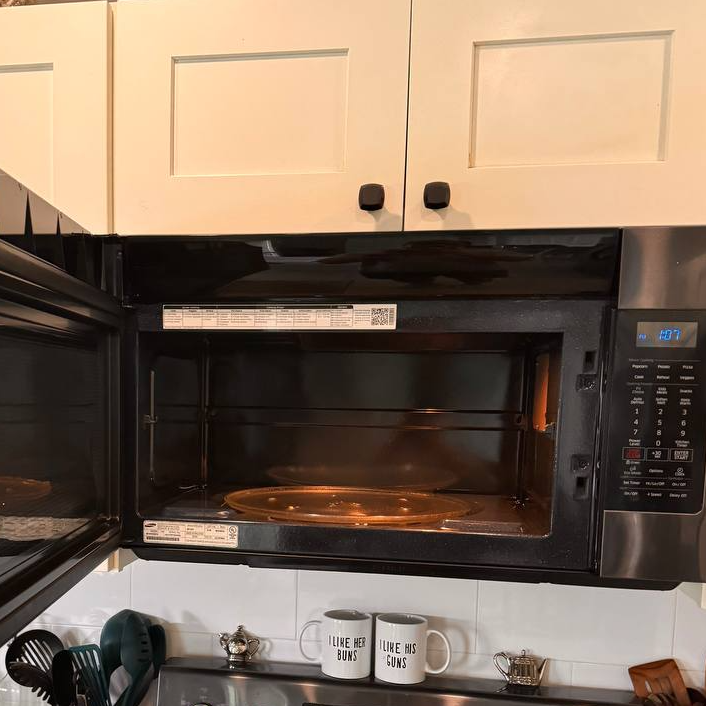
Your microwave starts normally. The light comes on, the turntable moves, and the fan sounds like it always does.
Then, somewhere in the middle of the cycle, everything stops.
Sometimes the display goes dark and comes back a few minutes later. In other cases, the microwave trips the circuit breaker. You reset it, try again, and the same thing happens.
A microwave that shuts off during operation does not automatically need to be replaced. But the way it shuts down can tell you a lot about where the problem may be.
The important part is not to keep restarting the microwave until something fails completely—especially when the symptom involves overheating, electrical protection, or high-voltage components.
Start With What Happens After the Microwave Stops
Before focusing on a particular part, pay attention to the sequence.
Does the microwave go completely dead?
Does the display remain on?
Does the circuit breaker trip?
Can you restart the microwave immediately?
Or does it only begin working again after sitting for several minutes?
Those differences matter.
A unit that shuts down and comes back after cooling can point toward an overheating condition or thermal protection device.
A microwave that trips the breaker as soon as it begins heating may have a different electrical problem.
And if the unit stops only when the door moves slightly, the door-switch circuit deserves attention.
The symptom may look the same from across the kitchen, but the diagnostic path can be very different.
A Typical Microwave Repair Scenario
Consider a common type of microwave repair call in Fort Myers.
The homeowner reports that the microwave works normally for about a minute. It heats food, the fan runs, and there are no unusual noises.
Then the unit suddenly goes completely dead.
After several minutes, the display comes back on and the microwave can be started again.
Instead of immediately blaming the control board, a technician should look at what is happening while the microwave is operating.
Is the cooling fan moving enough air?
Are the ventilation openings blocked?
Is a thermal protector opening because an internal component is getting too hot?
Is the magnetron overheating?
Are electrical connections showing signs of heat damage?
In this type of situation, the fact that the microwave returns after cooling is an important clue.
The shutdown may actually be a protection response rather than a random electronic failure.
That distinction can prevent unnecessary parts replacement.
Why Would a Microwave Shut Off When It Gets Hot?
Microwaves generate significant heat while operating.
Even though the appliance is designed to manage that heat, components such as the magnetron and other electrical parts still depend on proper cooling and ventilation.
If internal temperature rises beyond the safe operating range, a thermostat or thermal protector may interrupt power.
Possible reasons include:
- a cooling fan that is slowing down or failing;
- blocked ventilation;
- grease or debris restricting airflow;
- a failing magnetron that is running unusually hot;
- a faulty thermostat or thermal protector;
- damaged wiring or electrical connections.
If the microwave consistently shuts off after roughly the same amount of operating time and then returns after cooling, overheating should be considered.
Do not remove the cabinet to investigate this yourself.
Microwaves contain high-voltage components that can retain a dangerous electrical charge even after the appliance has been unplugged.
Check the Ventilation From the Outside
There are still a few safe observations you can make without opening the appliance.
First, make sure the external vents are not blocked.
For a countertop microwave, verify that the appliance has the clearance specified by the manufacturer.
For an over-the-range unit, check whether the exhaust or circulation fan seems to be operating normally.
Look for heavy grease buildup around accessible vents.
Also listen to the microwave.
If the usual cooling-fan sound has disappeared, become unusually weak, or changed significantly, that information can be useful during diagnosis.
Do not insert tools into the vents or remove exterior panels.
A visual and audible inspection is enough for a homeowner-level check.
What If the Microwave Trips the Circuit Breaker?
This is a different warning sign.
If the circuit breaker trips while the microwave is running, stop repeatedly resetting it and restarting the appliance.
A breaker is designed to respond when the electrical circuit experiences an unsafe condition.
The cause may be outside or inside the microwave.
Possible causes include:
- an overloaded household circuit;
- a damaged power cord or connection;
- internal wiring failure;
- a shorted high-voltage capacitor;
- magnetron failure;
- inverter failure on some models;
- another electrical component developing a short.
The microwave repair page for Appliance Repair Fort Myers specifically lists high-voltage capacitor, magnetron, wiring, and other electrical faults among causes of breaker-tripping problems.
One simple observation can help: determine whether the microwave is sharing the circuit with another high-demand appliance.
But if it previously worked normally on the same circuit and has suddenly begun tripping the breaker, the appliance itself should be properly tested before regular use continues.
Could the Door Switch Make the Microwave Stop?
Yes.
Microwave doors use safety switches—often called interlock switches—to confirm that the door is correctly closed before microwave energy can be generated.
A worn latch, misaligned door, damaged switch, or loose connection can make that signal unreliable.
Possible signs include:
- the microwave stops if the door is touched;
- the unit starts only when the door is pushed inward;
- the display remains on but heating stops;
- the microwave occasionally refuses to start;
- operation changes when the door is opened and closed again.
Door-switch problems can sometimes look like a control-board failure because the microwave behaves inconsistently.
But the door safety circuit should be tested before expensive electronic parts are recommended.
What About the Magnetron?
The magnetron is the component that produces the microwave energy used to heat food.
A failing magnetron does not always stop working all at once.
Depending on the failure, you may notice:
- intermittent heating;
- unusually loud humming;
- burning or electrical smells;
- overheating;
- shutdown after a short period;
- breaker trips;
- no heat even though the microwave still runs.
Magnetron diagnosis involves the high-voltage section of the microwave and is not a homeowner repair.
If there is an unusual smell, heavy buzzing, visible sparking, or repeated electrical shutdown, discontinue use until the appliance is inspected.
Can the Inverter Cause Random Shutdowns?
Some microwave designs use an inverter instead of a traditional high-voltage transformer arrangement.
The inverter regulates power delivered to the magnetron.
An inverter problem can produce symptoms such as:
- intermittent heating;
- unexpected shutdown;
- no heat;
- error codes;
- abnormal operation under higher power settings.
Again, these symptoms overlap with several other failures.
That is why replacing an inverter based only on “the microwave shuts off” is not a reliable diagnostic strategy.
The technician should verify the power supply, cooling, door-switch operation, thermal protection, and other related components.
Could It Just Be the Control Board?
It could be—but it should not be the first assumption.
The control board coordinates much of the microwave’s operation, so a board failure can certainly cause unexpected shutdowns.
However, the control may also be responding correctly to a bad signal from another component.
For example, a microwave may shut down because:
- the door switch briefly loses contact;
- a thermal protector opens;
- a monitored component overheats;
- an inverter reports a fault;
- incoming electrical power is interrupted.
Replacing the control board without testing these systems first can turn diagnosis into guessing.
A proper appliance repair should identify what caused the shutdown—not simply replace the most expensive part connected to the symptom.
What If the Microwave Stops but the Display Stays On?
This is another useful clue.
If the display and timer remain powered but the microwave stops heating or the fan shuts down, the appliance may not have lost its entire power supply.
The problem may be related to an internal operating circuit rather than the household breaker or main power connection.
Depending on the model, possible causes include:
- door-switch problems;
- overheating components;
- inverter or high-voltage faults;
- control-board issues;
- fan or temperature-protection problems.
Write down exactly what remains working after the failure.
Details like these can make the diagnostic process faster.
What If It Goes Completely Dead?
If the microwave loses the display, light, fan, and all controls at once, check whether the household breaker has tripped.
If the breaker is still on and the microwave later returns to life by itself, thermal protection becomes a stronger possibility.
If the microwave remains completely dead, the problem could involve:
- the incoming power connection;
- internal fuse;
- thermostat or thermal cutoff;
- wiring;
- control circuitry.
Do not keep cycling the breaker or repeatedly plugging and unplugging the appliance to force it to restart.
Signs You Should Stop Using the Microwave
Stop using the microwave and arrange professional diagnosis if you notice:
- repeated breaker trips;
- burning or electrical odors;
- visible arcing or sparking;
- smoke;
- loud electrical buzzing;
- the microwave becoming unusually hot;
- shutdowns that are happening more frequently;
- damaged power cord or plug;
- operation continuing when the door is open.
The last symptom is especially important because the door-interlock system is a safety system.
Do not bypass or tape down a microwave door switch.
Is It Worth Repairing a Microwave That Shuts Off?
That depends on the microwave.
A basic countertop model may be inexpensive enough that replacement makes more sense if a major high-voltage component has failed.
A built-in or over-the-range microwave can be a different decision.
Those units may cost substantially more to replace and may also require installation, trim, venting, or cabinetry work.
The site’s microwave service page similarly notes that higher-value mounted and feature-rich microwaves can be more economical to repair than replace.
The useful question is not simply, “How old is the microwave?”
It is:
What actually failed, what will the repair cost, and what would comparable replacement and installation cost?
You cannot answer that accurately until the cause of the shutdown is identified.
What a Professional Diagnosis Should Check
When a microwave shuts off mid-cycle, diagnosis may include checking:
- incoming power;
- electrical connections;
- door switches and latch alignment;
- cooling fan operation;
- ventilation;
- thermostats and thermal protectors;
- wiring;
- control system;
- inverter, where applicable;
- magnetron and high-voltage system when necessary.
The site describes its general repair process as diagnostics, repair, then testing and inspection.
That last step matters.
After the fault is repaired, the microwave should be operated long enough to confirm that it no longer shuts down under the conditions that previously caused the problem.
Microwave Repair in Fort Myers
Appliance Repair Fort Myers provides microwave repair and appliance repair in Fort Myers, Cape Coral, Estero, Bonita Springs, Naples, and nearby communities.
The company services countertop, over-the-range, built-in, and combination microwave models according to its current microwave service page.
If your microwave shuts off during a cycle, pay attention to what happens next.
If it works again only after cooling down, overheating may be part of the diagnosis.
If it trips the circuit breaker, stop repeatedly restarting it and have the electrical system checked.
If touching the door changes the way the microwave runs, the interlock system may need attention.
Those clues can help separate a relatively straightforward repair from a larger electrical or high-voltage problem.
Most importantly, do not open the microwave cabinet to test high-voltage components yourself.
A microwave that keeps shutting off is giving you useful information. The right diagnosis is about understanding why it stopped—not guessing which part to replace.