Dishwasher Not Drying Dishes in Fort Myers? Causes, Checks, and a Real Repair Case
Opening the dishwasher after a full cycle and finding wet glasses, dripping plates, and water-covered silverware can be frustrating. The dishwasher may fill, wash, and drain normally, with no error code or standing water—yet the drying stage does not seem to work.
In Fort Myers and other parts of Southwest Florida, some moisture on plastic containers can be normal. Plastic does not retain heat as well as glass, ceramic, or metal, so water droplets may remain even when the dishwasher is operating correctly.
However, when the entire load stays wet after every cycle, the dishwasher may have a problem with the heating element, thermostat, temperature sensor, vent, drying fan, wiring, or control system.
This guide explains what may be normal, what you can check safely, and when it is time to schedule professional dishwasher repair in Fort Myers.
Why Dishes May Stay Wet After a Dishwasher Cycle
Modern dishwashers use different drying methods depending on the model.
Some use a heating element during the final portion of the cycle. Others rely on condensation drying, hot final-rinse water, rinse aid, a vent, or a drying fan.
A small amount of moisture may be normal when:
- Most of the wet items are plastic
- The door is opened before the cycle finishes
- Rinse aid is empty
- Heated Dry is not selected
- The dishwasher was recently loaded with many plastic containers
If glasses, plates, silverware, and the dishwasher interior remain unusually wet after every load, further diagnosis may be needed.
Common Causes of a Dishwasher Not Drying
1. The heating element is not working
On dishwashers equipped with a heating element, the element helps raise water and interior temperatures during specific portions of the cycle.
If it fails, the dishwasher may continue washing and draining while producing little or no heat.
Possible signs include:
- Dishes remain wet after the cycle
- Plates and glasses feel cool
- Heated Dry makes little difference
- Cleaning performance has also declined
- The dishwasher completes the cycle without an obvious error
A heating element should be electrically tested before replacement. Wet dishes alone are not enough to confirm that the element has failed.
2. The rinse-aid dispenser is empty
Rinse aid helps water move off dish surfaces instead of remaining as droplets.
Check the dispenser and refill it if necessary. If drying improves after several cycles, the dishwasher may not require a repair.
3. The thermostat or temperature sensor is faulty
The dishwasher needs accurate temperature information to control heating.
A faulty high-limit thermostat or temperature sensor can interrupt heating or cause the control system to receive incorrect temperature information.
Because these components can create symptoms similar to a failed heating element, testing is important before ordering parts.
4. The drying vent or fan is not operating
Some models use a vent and fan to move hot, humid air out of the dishwasher.
If the vent does not open or the drying fan fails, moisture may remain trapped inside the tub and settle back onto dishes.
This can cause heavy condensation even when the dishwasher is producing heat.
5. The incoming water is not hot enough
Water temperature can affect both cleaning and drying performance.
If the dishwasher begins the cycle with water that is too cool, some models may struggle to reach the temperatures expected during washing and drying.
If poor drying appears together with food residue or weak cleaning performance, water temperature should be included in the diagnosis.
6. The heating circuit or control system has a problem
A working heating element cannot produce heat if it is not receiving the correct electrical supply.
Damaged wiring, loose connections, relays, sensors, or electronic control problems can prevent the heating system from operating normally.
This is another reason not to replace the heating element based on symptoms alone.
A Fort Myers Dishwasher Repair Case: Failed Heating Element
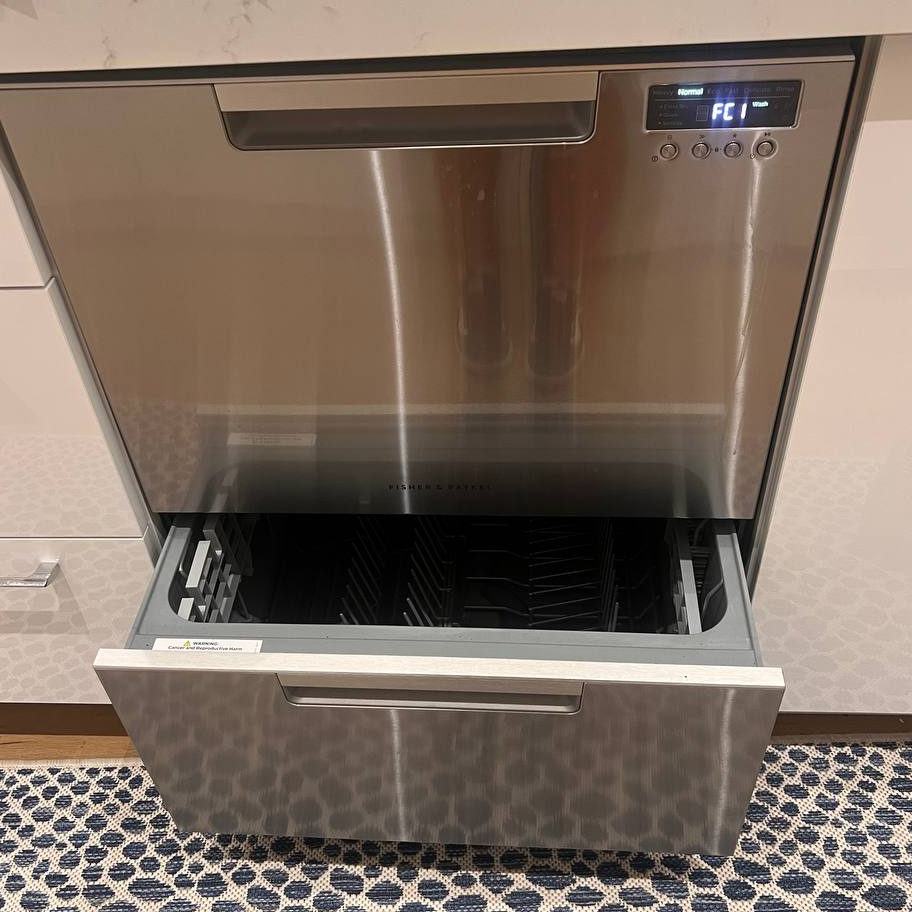
One recent dishwasher repair in Fort Myers involved a machine that appeared to complete every cycle normally.
The customer reported that the dishwasher filled, sprayed, and drained without a problem. There was no standing water at the bottom and no error code on the display.
The problem appeared when the door was opened: glasses, plates, and silverware were still covered in water, and the dishes were barely warm.
Rinse aid was present, and the Heated Dry option was enabled.
During diagnosis, we checked the heating circuit and tested the heating element. The element had failed and was no longer producing the heat required during the cycle.
The failed heating element was replaced and the dishwasher was tested through the heating and drying stages.
After the repair, the dishwasher reached the expected operating temperature and completed the cycle with normal drying performance.
This case is also a good example of why diagnosis comes before parts replacement. A failed thermostat, temperature sensor, wiring connection, or control board could have produced similar symptoms.
Safe Checks You Can Perform Before Scheduling Service
Before requesting appliance repair in Fort Myers, there are several basic checks you can perform without disassembling the dishwasher.
Check the rinse aid
Make sure the rinse-aid dispenser is not empty.
Use the correct drying option
If your dishwasher offers Heated Dry, Extra Dry, or a similar setting, make sure it is enabled.
Allow the cycle to finish
Opening the door early releases heat and steam before the drying stage is complete.
Let the dishwasher finish the entire cycle before evaluating drying performance.
Compare plastic with glass and ceramic
Plastic containers commonly remain wetter than other materials.
If plastic is wet but glasses and ceramic plates are mostly dry and warm, the dishwasher may be operating normally.
If everything remains cold and soaked, the heating or drying system deserves closer inspection.
Check whether the dishes feel warm
Carefully check the dishes shortly after the cycle finishes.
If a heated cycle has completed but the dishes and dishwasher interior remain unusually cool, the appliance may not be reaching the expected temperature.
Do not remove electrical panels, test live wiring, or attempt to bypass thermostats or safety devices. Dishwasher electrical diagnosis should be performed with the appropriate tools and procedures.
Wet Dishes or a Bigger Dishwasher Problem?
The pattern of the moisture can help narrow down the possibilities.
Mostly wet plastic containers
This may be normal, especially on dishwashers that use condensation drying.
All dishes remain wet but feel warm
Check rinse aid, loading, drying settings, and whether the cycle is being interrupted before it finishes.
All dishes remain wet and cold
The heating element, thermostat, temperature sensor, wiring, or control system may require testing.
Heavy moisture remains inside the dishwasher
A vent or drying-fan problem may be preventing humid air from leaving the tub.
Poor drying combined with poor cleaning
The dishwasher may not be reaching the correct water temperature, or there may be another circulation or heating problem.
Error codes appear during the cycle
Record the exact error code before resetting the dishwasher. The code can provide useful information during professional diagnosis.
When to Schedule Dishwasher Repair
Schedule a professional diagnostic when basic checks do not improve drying performance or when the problem appeared suddenly after the dishwasher previously worked normally.
Contact a dishwasher technician if:
- Dishes remain soaking wet after every cycle
- Plates and glasses remain cold
- Heated Dry no longer makes a difference
- The dishwasher is not cleaning properly
- An error code appears
- The drying fan is unusually noisy or silent
- The cycle stops unexpectedly
- You notice a burning smell or electrical problem
- The dishwasher repeatedly fails to heat
A proper diagnostic should determine whether the problem is the heating element, thermostat, temperature sensor, drying fan, vent, wiring, or control system before replacement parts are recommended.
Dishwasher Repair in Fort Myers and Southwest Florida
Appliance Repair Fort Myers provides dishwasher diagnostics and appliance repair throughout:
- Fort Myers
- Cape Coral
- Estero
- Bonita Springs
- Naples
- Marco Island
- Nearby Lee and Collier County communities
Our technicians diagnose common dishwasher problems including poor drying, heating failures, drainage problems, water leaks, circulation issues, dispenser failures, unusual noises, sensors, pumps, wiring, and control boards.
When scheduling dishwasher repair in Fort Myers, include the dishwasher brand, model number, whether the dishes feel hot or cold after the cycle, any error codes, and whether the machine is still washing and draining normally.
These details can help narrow down the problem before the appointment.
Do Not Keep Running Extra Cycles to Dry the Same Load
A few water droplets — especially on plastic — do not necessarily indicate a dishwasher failure.
But when glasses, plates, and silverware repeatedly come out cold and soaking wet, the drying problem should not be ignored.
A failed heating or drying component can affect more than convenience. Depending on the dishwasher design, the same problem may eventually affect wash temperature and overall cleaning performance.
If your dishwasher finishes every cycle but leaves the entire load wet, schedule a diagnostic with Appliance Repair Fort Myers.
We provide professional dishwasher and appliance repair in Fort Myers and surrounding Southwest Florida communities.
Dishwasher Still Leaving Everything Wet?
If the dishwasher completes the cycle but your dishes remain cold and soaked, the heating or drying system may need professional diagnosis.
Appliance Repair Fort Myers provides dishwasher repair in Fort Myers, Cape Coral, Estero, Bonita Springs, Naples, Marco Island, and nearby Southwest Florida communities.
We diagnose heating elements, thermostats, temperature sensors, drying fans, vents, wiring, and control systems before recommending a repair.
Schedule your dishwasher diagnostic online or call us today to speak with our service team.