
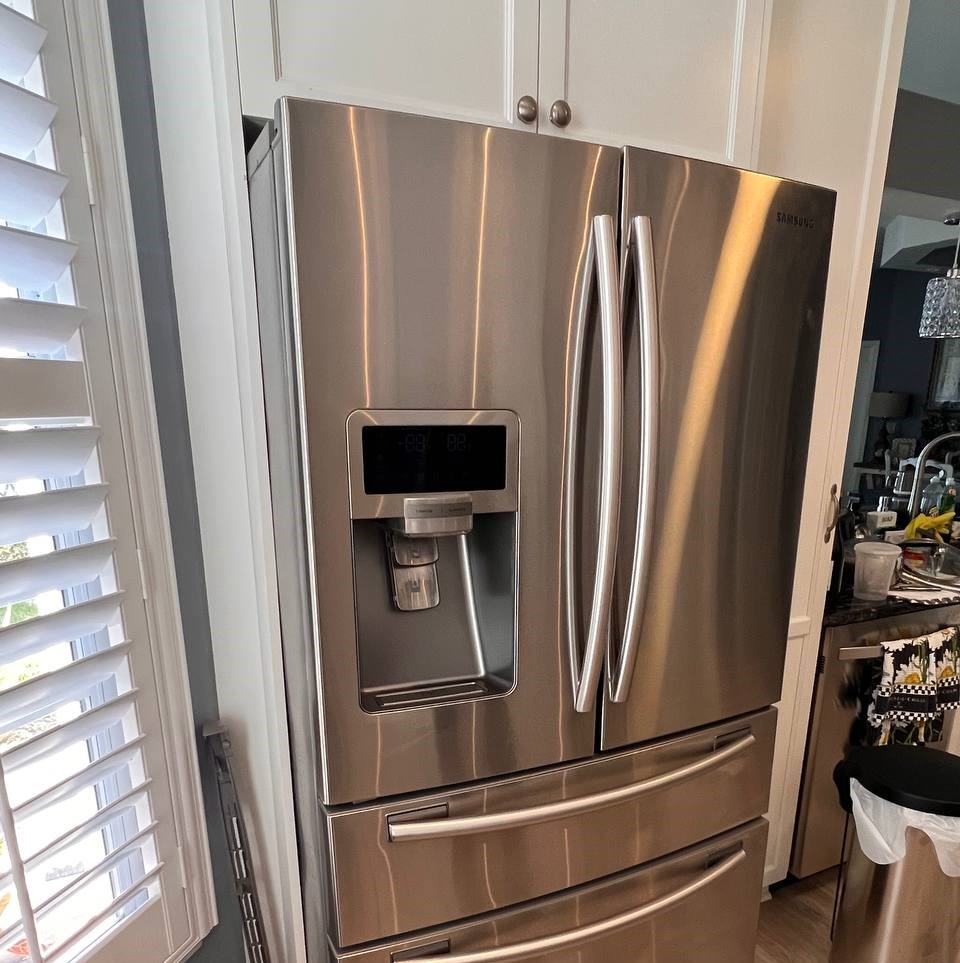
Water droplets around a refrigerator door can be confusing. The appliance may still be cold, the lights may work, and there may be no error code—yet moisture continues appearing on the shelves, door frame, center divider, or freezer walls.
In Fort Myers and other parts of Southwest Florida, some refrigerator condensation can be caused by the surrounding climate. Warm, humid air enters the appliance whenever a door is opened. When that air contacts cold interior surfaces, moisture can form.Water droplets around a refrigerator door can be confusing. The appliance may still be cold, the lights may work, and there may be no error code—yet moisture continues appearing on the shelves, door frame, center divider, or freezer walls.
However, condensation that keeps returning may be the first visible sign of a door-seal problem, restricted airflow, improper leveling, a defrost-system failure, or an appliance that is no longer maintaining a safe temperature.
This guide explains what may be normal, what you can check safely, and when it is time to schedule professional refrigerator repair in Fort Myers.
Why Refrigerators Develop More Condensation in Southwest Florida
Fort Myers experiences especially humid conditions during the summer. Historical climate data from the Florida Climate Center shows average July relative humidity of approximately 88% during morning observations and 61% during afternoon observations.
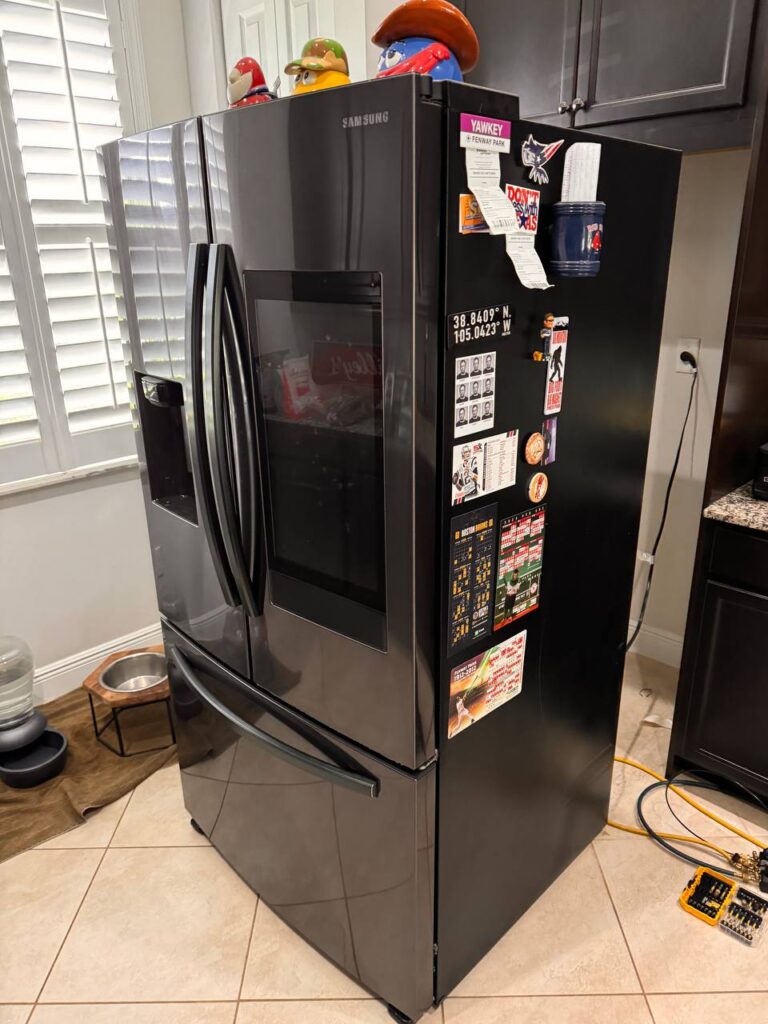
Every time a refrigerator door opens, some of that humid room air enters the cabinet. The refrigerator must then cool the incoming air and remove the added moisture.
A small amount of temporary moisture may be normal after:
- Frequently opening the doors
- Loading a large amount of groceries
- Leaving a door open for several minutes
- Restarting the refrigerator after it was unplugged
- A temporary loss of air conditioning inside the home
- Very humid weather
Manufacturers including Whirlpool and GE note that frequent door openings and high indoor humidity can produce moisture on interior walls, food packages, door frames, and the center divider between French doors.
Normal moisture should usually decrease after the doors remain closed and the refrigerator returns to its stable operating temperature.
When Refrigerator Condensation Is Not Normal
Moisture becomes more concerning when it appears repeatedly, forms heavy frost, collects underneath drawers, runs onto the floor, or is accompanied by poor cooling.
Persistent condensation may indicate one of the following problems.
1. The refrigerator door is not closing completely
A food container, drawer, shelf, or ice buildup may prevent the door from closing all the way. Even a small opening allows warm air to enter continuously.
Check the entire door opening and make sure nothing is touching the door or preventing the gasket from contacting the cabinet.
On French-door refrigerators, also inspect the movable center flap. If the flap does not rotate into the correct position, the two doors may not create a complete seal.
2. The door gasket is dirty, damaged, or deformed
The rubber gasket creates an air seal between the door and refrigerator cabinet. Food residue, grease, crumbs, and sticky spills can prevent it from sealing evenly.
Carefully clean the gasket and the surface it contacts with a soft cloth and mild soap. Dry both surfaces before closing the door.
Inspect the gasket for:
- Tears or cuts
- Hardened sections
- Loose corners
- Areas that have folded inward
- Visible gaps between the gasket and cabinet
GE advises replacing a gasket when it has cuts, tears, or other damage that prevents a proper seal.
A gasket should not be replaced based only on appearance. Door alignment, hinge condition, cabinet leveling, and the center mullion should also be checked before ordering parts.
3. Air vents are blocked
Cold air must circulate between the freezer and fresh-food sections. Large containers, bags, or food packages placed directly against an air vent can restrict that movement.
Restricted airflow may cause one section to become too warm while another develops frost or excessive moisture.
Look for vents along the rear or side walls and leave space around them. Do not remove internal panels or attempt to access the evaporator compartment yourself.
Whirlpool identifies blocked vents as a possible cause of both temperature and moisture problems.
4. The refrigerator is not properly leveled
Many refrigerators are designed with a slight backward tilt so the doors close naturally. If the cabinet leans forward or sits unevenly, a door may remain slightly open even though it appears closed.
Check whether the refrigerator rocks when gently pressed and whether both doors close smoothly. Follow the leveling procedure in the manufacturer’s installation instructions because adjustment methods differ between models.
5. The defrost drain may be restricted
During an automatic defrost cycle, melted frost normally travels through a drain into a pan underneath the refrigerator.
If the drain freezes or becomes blocked, water may collect:
- Under the crisper drawers
- At the bottom of the freezer
- Along the rear interior wall
- On the floor near the refrigerator
A blocked drain should not be confused with a leaking water valve or supply line. The refrigerator may need to be partially disassembled to determine where the water originates.
Avoid inserting sharp objects into a frozen drain. This can damage the drain tube, evaporator, or surrounding liner.
6. The defrost system may not be operating correctly
Heavy frost covering the freezer’s rear interior panel is different from a few drops of condensation.
A thick frost layer may indicate a problem with the:
- Defrost heater
- Defrost sensor or thermostat
- Control board
- Evaporator fan
- Door seal
As frost builds, it can eventually block airflow. The freezer may still feel cold while the refrigerator section becomes warm.
Turning the appliance off may temporarily melt the frost, but it will not correct a failed component. The frost usually returns until the original cause is repaired.
7. The refrigerator may not be reaching a safe temperature
Do not rely only on the control-panel number or the feeling of cold air when the door opens.
The USDA recommends maintaining the refrigerator at 40°F or below and the freezer at approximately 0°F. An appliance thermometer provides a more reliable measurement than the refrigerator display alone.
Place a refrigerator thermometer near the center of the fresh-food compartment and allow enough time for the reading to stabilize.
Professional diagnosis may be needed when:
- The temperature remains above 40°F
- Food spoils earlier than expected
- The compressor runs almost continuously
- The refrigerator repeatedly starts and stops
- Frost returns after being removed
- One compartment is cold while the other is warm
Safe Checks You Can Perform Before Scheduling Service
Before requesting appliance repair in Fort Myers, homeowners can perform several basic checks without disassembling the refrigerator.
Dry the visible moisture
Wipe the interior walls, shelves, gasket, and door frame with a clean towel. This gives you a clear starting point for determining whether the moisture returns.
Reduce unnecessary door openings
Plan what you need before opening the refrigerator. Repeatedly opening the door during troubleshooting introduces more humid air and makes the problem harder to evaluate.
Check for door obstructions
Make sure food packages, shelves, drawers, and ice bins are installed correctly and are not preventing the door from closing.
Clean and inspect the gasket
Remove residue with mild soap and water. Check the entire perimeter for damage or sections that do not contact the cabinet evenly.
Make space around the air vents
Rearrange food so cold-air openings are not covered.
Measure the actual temperature
Use an appliance thermometer rather than relying solely on the display. Allow several hours after rearranging food or changing a temperature setting before evaluating the result.
Listen for changes in operation
Notice whether the refrigerator runs continuously, clicks repeatedly, becomes unusually quiet, or develops a new buzzing or grinding noise.
Do not remove electrical covers, test live components, puncture ice, or attempt to add refrigerant. Refrigerator sealed-system and electrical repairs require appropriate tools and training.
Condensation, a Water Leak, or a Cooling Failure?
The location of the moisture can help narrow down the possibilities.
Moisture on food packages or interior walls
This is commonly associated with frequent door openings, high humidity, blocked vents, or an incomplete door seal.
Water underneath the crisper drawers
A restricted or frozen defrost drain is a common possibility.
Moisture around the door frame
Inspect the gasket, door alignment, hinges, and French-door center flap. Some temporary moisture may occur during periods of high humidity, but it should not become a continuous stream of water.
Water behind or underneath the refrigerator
Possible causes include the water supply line, inlet valve, filter housing, drain pan, or defrost-drain tubing. Turn off the refrigerator’s water supply if an active plumbing leak is visible.
Frost covering the freezer’s rear panel
This pattern may indicate a defrost-system or airflow problem and generally requires further testing.
Condensation combined with warm temperatures
This is more urgent. The appliance may have an airflow, fan, control, compressor-starting, or sealed-system problem.
When to Schedule Refrigerator Repair
Schedule a professional diagnostic when basic checks do not stop the moisture or when condensation is accompanied by another performance problem.
Contact a refrigerator technician if:
- The refrigerator remains above 40°F
- Heavy frost returns repeatedly
- Water continues collecting under the drawers
- A door gasket is torn or will not seal
- The refrigerator runs without stopping
- You hear repeated clicking from the rear of the unit
- The freezer is cold but the refrigerator is warm
- Water is leaking onto the floor
- The door is misaligned or will not close properly
- An error code appears
- Food is beginning to spoil
A proper diagnostic should identify the source of the moisture before parts are recommended. Replacing a door gasket will not solve the problem if the real cause is a misaligned hinge, blocked drain, failed defrost component, or damaged center flap.
Refrigerator Repair in Fort Myers and Southwest Florida
Appliance Repair SO provides residential refrigerator diagnostics and repair throughout:
- Fort Myers
- Cape Coral
- Estero
- Bonita Springs
- Naples
- Marco Island
- Nearby Lee and Collier County communities
Our technicians work on common refrigerator problems including cooling failures, frost buildup, water leaks, door-seal problems, evaporator and condenser fans, ice makers, sensors, control boards, compressors, and defrost systems.
When scheduling refrigerator repair in Fort Myers, include the refrigerator’s brand, model number, current temperature, location of the moisture, and any noises or error codes you have noticed. These details can help the technician prepare for the appointment.
Do Not Ignore Moisture That Keeps Returning
A small amount of temporary condensation can be normal during humid Southwest Florida weather. Moisture that repeatedly returns, however, should not be dismissed.
The sooner the source is identified, the easier it may be to prevent:
- Spoiled food
- Mold or odors
- Damaged cabinets or flooring
- Excessive frost
- Longer compressor run times
- A complete cooling failure
If your refrigerator continues sweating, leaking, frosting over, or struggling to maintain temperature, schedule a diagnostic with Appliance Repair SO. We provide professional appliance repair in Fort Myers and surrounding Southwest Florida communities.
Still Seeing Condensation Inside Your Refrigerator?
If moisture keeps returning, the refrigerator is not maintaining a safe temperature, or water is collecting under the drawers or on the floor, the problem may require professional diagnosis.
Appliance Repair SO provides professional refrigerator repair in Fort Myers, Cape Coral, Estero, Bonita Springs, Naples, Marco Island, and nearby Southwest Florida communities.
Schedule your refrigerator diagnostic online or call us today to speak with our service team.